Where Should I Live? A Quiz for Remote Workers

Lisbon, Alfama. Mine for one month, like everywhere else that year.
The apartment I rented in Lisbon had a tall window with a blue iron railing over a cobblestone alley in Alfama. I had it for a month, because a month was the rule.
For five years that was the system: a month per city, find a gym, live out of a carry-on, repeat, across more than 20 countries. Which means I answered the question behind every where should I live quiz on the internet in real life, with my own rent money on the line. Some of those calls I made on ~ vibes ~, and vibes are expensive.
Then I stopped. I didn’t quit because I was tired of travel. I quit because I was tired of transience, and I settled in San Francisco. So I have opinions about choosing a city, and most of them cost me something.
Here’s how to decide where to live: run the city through four hard filters before you run it through your feelings — cost of living against what you truly earn, whether your work is portable, what the visa and time zone do to an ordinary week, and whether you can build community there. Taste breaks the tie. It doesn’t get to vote first.
Most “Where Should I Live” Quizzes Are Personality Bait
Let’s get the honest part out of the way. Almost every where-should-I-live quiz online is personality bait. Eight questions about mountains versus beaches, a stock photo of a laptop on a balcony, and a verdict of Portland. None of them ask what you earn or whether you can legally work there.
The question underneath is real, though. Where you live sets your rent, your friends, and the hours you get for your own work. Here’s how I choose a city now, after five years of getting it wrong in public. Let’s dive in.
Run the Cost of Living Against Your Actual Income
Start here, because this filter kills more dream cities than the other three combined. Not the city’s average rent, but the rent on the apartment you’d sign for, in the neighborhood you’d want. Numbeo is the fastest free sanity check I know.
Price the month you’d live, not the week you’d visit. Monthly rentals plus local groceries often beat my old LA rent.
Add what changes by country: health coverage, a working phone plan, flights home you can’t skip.
Test the total against your lowest-earning month last year, not your best.
Then price one bad month on top. A dentist. A dead laptop. An emergency flight.
Learn what a city charges for your daily habits, too, because that’s where budgets leak. Boba in Taipei ran about $3 against the $10 I pay in the US. Singapore, a city I loved, charged $9 for one pour-over. It won on delight and lost on arithmetic.
Is Your Work Actually Location-Independent?
Here’s the thing: most people who say their job is remote mean remote within one time zone. That’s a different job. Mine genuinely traveled, because I ghostwrite async after the kickoff, weekly chapter drops, feedback by voice memo, no standing calls.
Count the meetings last month that genuinely had to happen live. That number is your leash.
Check whether your employer allows it on paper. Payroll and tax rules decide this, not your manager’s enthusiasm.
If you freelance, ask whether your pipeline survives the move. Referral networks are local more often than anyone admits.
Get paid in a currency you can spend, into an account that won’t lock you out abroad.
Visas, Time Zones, and the Boring Stuff That Picks the City
The unglamorous filters make the actual decision. Traveling alongside big groups of remote workers, I watched more plans die on a time zone than a budget.
Overlap hours: count the working hours you’ll share with the people who pay you. Under three is a job change.
Visa status: a tourist stamp is not a work permit, and most nomad visas set an income floor.
The Schengen 90-days-in-180 rule shapes a whole European year whether you plan for it or not.
Healthcare: price a specialist visit before you land. I have a chronic illness in remission, so this is never hypothetical for me.

Porto. The bookshop waives its entry fee if you buy a book, which is how they get you.
Community Is the Filter That Ends Most Nomad Years
I underrated this one longest, and it’s what ended my experiment. A city can be cheap, legal, well-timed, beautiful, and still lonely in a way that shows up in your work before your mood.
When I quit the nomad life, it wasn’t burnout and it wasn’t homesickness. I missed a farmer’s market I went to every Saturday. I missed a barista who knew my name. Absurdly small things to build a life around, and exactly the right ones.
So test for it first. Is there a gym, a run club, a bookstore with a reading series, some version of your people? My rule was a gym by day two, and the gym did more work than the fitness.
The Gut Check Nobody Puts in a Quiz
Run all four filters and two or three cities usually survive. That’s when you get to be completely unscientific.
Ask the ugly question: which one do you want to be a person in? Not visit. Not endure. Be a person in on a Tuesday, in the rain, with nothing on the calendar. For me that has always been Buenos Aires, and no spreadsheet produced it: Palermo, tango on the sidewalk, flat whites, Pão de Queijo.
But the gut breaks ties. It doesn’t overrule the arithmetic. I have never once seen a city love somebody out of a bad budget.
The Where Should I Live Quiz That Checks Your Rent
Okay, yes — my husband Kyle and I built this one. But hear me out.
Where In the World Is Your Career Luckiest? is the quiz I spent five years wishing existed. It computes your six astrocartography career lines for real, finds the cities they run through, then does what no astrologer has ever done for me and checks the cost of living in each one. It ends in live listings from the CozyJobs board, plus remote roles you could take from any city on it.
The astrology is the fun layer on top of real rent math, and I’d rather say so out loud than let you find out later. No planet has an opinion about your lease. I use astrology the way I use tarot, as a tool for asking better questions. The experiment behind that is in my astrocartography essay, plus a breakdown of what each planetary line means.
It’s free, it takes two minutes, and it needs your exact birth time. (The real one, off the certificate.)
And since the where question is usually a what-job question underneath, the astro quiz has 20 siblings. I ranked the full lineup in my guide to the best career quizzes.
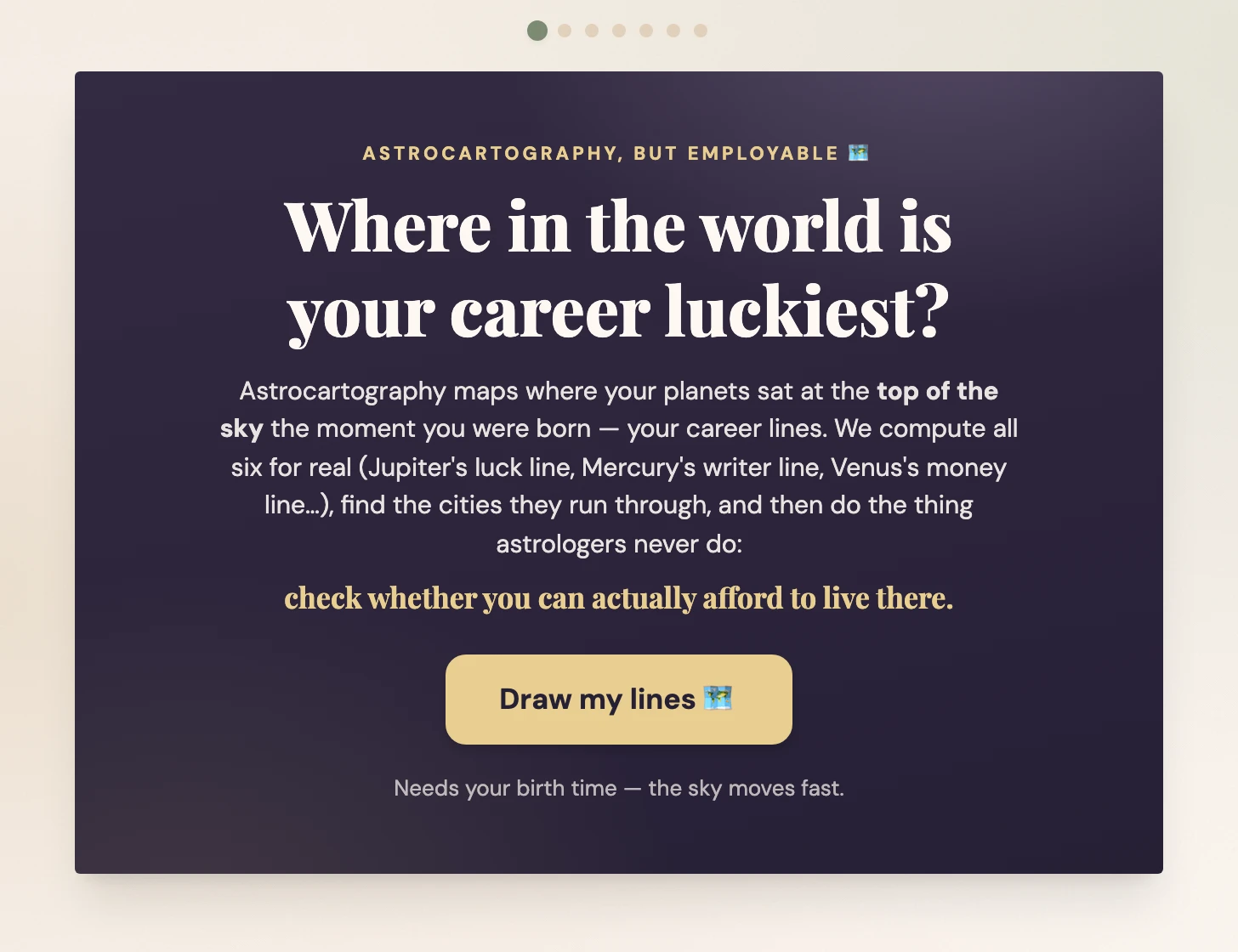
Your lines, and then the rent in every city they run through.
And if the job is the part standing between you and the move: 🛋️ CozyJobs is the coziest job corner of the internet — thousands of jobs on a board updated daily, creative and remote roles front and center, a free application tracker, and CozyApply, our browser extension whose basic autofill is free. It’s $25/month, or $250/year on the annual plan, which works out to two months free. The quiz sits on a shelf of 21 free career quizzes at cozyjobs.com/quizzes.
FAQ: Choosing Where to Live as a Remote Worker
How do I decide where to live?
Run four filters before your feelings: cost of living against your real income, whether your work is portable, what the visa and time zone do to an ordinary week, and whether you can build community there. Two or three cities usually survive, and taste breaks the tie.
What is the best city for remote workers?
There isn’t one, which is why every list of the best cities for remote workers disagrees with the next. The best city for you is the most affordable place that overlaps your clients’ hours, lets you stay legally, and holds people you’d want to know.
How much should I budget to move abroad?
Budget the setup month first, because it’s always the expensive one: flights, a deposit or first monthly rental, health coverage, and a cushion for the week everything breaks. Then price a normal month with Numbeo plus real listings.
Is a where-should-I-live quiz accurate?
Not on its own, and be suspicious of any quiz that answers in one word. The useful ones do arithmetic — cost of living, income, visa reality — instead of asking whether you’re a mountains person. Ours checks the rent in every city it names.
Wherever the four filters land you, go stand in it for a month before you commit to a year, and change your mind out loud when the math changes.
I’m rooting for you.
More From My Nomad Years
My Digital Nomad Story — how a cheap-Airbnb road trip in 2020 became five years in a carry-on
Working Remotely in Buenos Aires — the practical guide to my favorite city on Earth
My Accidental 5-Year Astrocartography Experiment — what the map knew before I did

Hello! 👋 I’m Amy Suto. I’m a bestselling author, San Francisco content creator, and co-creator of the job board 🛋️ CozyJobs. Join CozyJobs to browse thousands of jobs and get daily matches to your inbox — writing and creative roles front and center!
GET ON THE LIST
Find your next writing job on 🛋️ COZYJOBS — thousands of jobs on a board updated daily, writing and creative roles front and center. ✨ The application tracker is free (basic CozyApply autofill is too), and paid plans start at $25/month with daily job matches straight to your inbox. Real writers are landing real work—don’t miss out.
FOLLOW ME ON GOOGLE
Add me as a preferred source and Google shows you more of my posts in Top Stories.

MY NEW BOOK: WRITE FOR MONEY & POWER
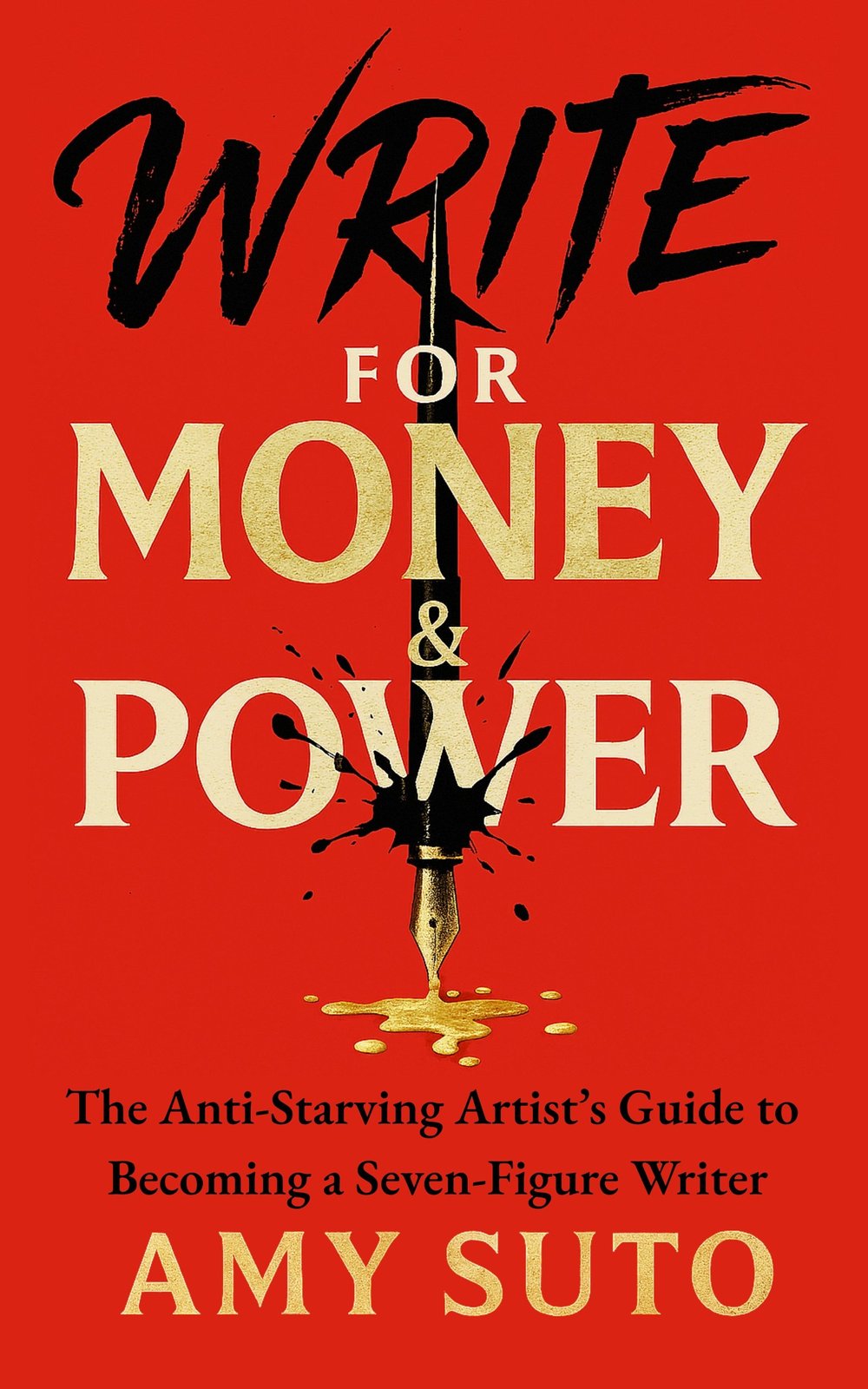
The anti-starving-artist's guide to becoming a seven-figure writer.
MY NEW NOVEL: LET ME BE YOUR GHOST

My romantic thriller arrives November 2026 — a ghostwriter with secrets, a billionaire CEO with more. Preorder one book, get two. Claim your bonus here →
MY ROMANTASY NOVEL: THE ASH TRIALS

The deadliest game is remembering who you are.
MY DETECTIVE NOVEL: THE NOMAD DETECTIVE

Crime crosses borders, but so does this detective.
MY HOW-TO BOOK: SIX-FIGURE FREELANCE WRITER
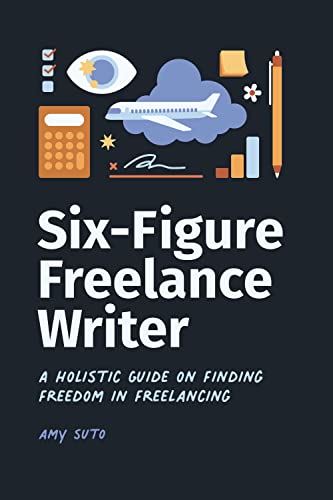
Work smarter, not harder — without the burnout.
RECENT POSTS
JOIN THE WRITING JOB BOARD
FOLLOW ME ON IG @SUTOSCIENCE