Should I Quit My Job? A Quiz, Then the Real Math
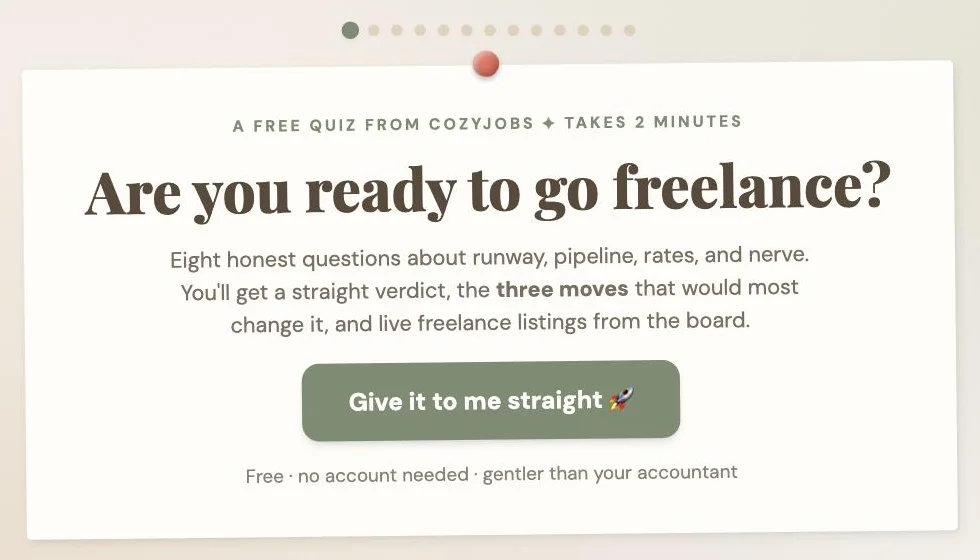
Eight questions. No motivational poster at the end.
At 22 I was an assistant to a TV lit agent at Verve. I’d get to a Coffee Bean before sunrise with a dirty chai and Bon Iver in my headphones, because those ninety minutes were the only part of the day that belonged to my own writing. Then the phones started.
I stayed because everyone told me the desk was a ladder. It was a dead end with a nice logo on the door. So when a reader tells me they took a should I quit my job quiz at midnight and it told them to follow their heart, I don’t laugh. I ask what their rent is.
What finally got me out of Hollywood wasn’t courage. It was 2020 closing the writers’ room I was in. I went all-in on freelancing that year and my income tripled, which sounds like a triumph until you notice that a pandemic did the quitting.
Here’s my honest answer to should I quit my job: you’re ready when you have six months of expenses in the bank, a pipeline of work you can already name out loud, and rates that clear your monthly number. Not when you’re merely miserable.
Misery gets you looking. Math gets you out. Let’s dive in.
The Four Things I’d Check Before You Quit Anything
Before the fun quiz, the unfun list. Four boxes I’d want ticked before I’d tell a friend to hand in notice.
Runway. Add up your real monthly expenses (rent, insurance, groceries, the four streaming subscriptions you forgot about) and multiply by six. Three months is survivable, but it turns every client call into a hostage negotiation. Six months buys you the right to say no to bad-fit work.
Pipeline. Name the income out loud. Not “I could probably find clients,” but “these two already paid me, and this third one asked what I charge.” A pipeline that exists only in your imagination is a hobby with anxiety attached.
Rates. Take the monthly income you need, divide by the billable hours you can honestly sell in a month (not 160, try 60 to 80), and look at what falls out. If that number is higher than what you charge now, you have a pricing problem, and the what-to-charge quiz will run it.
Nerve and health. Freelancing runs on being told no on a Monday and pitching again on a Tuesday. If you’re sleeping four hours a night and eating dinner from a vending machine, that resilience isn’t available yet. Fix the sleep first.
That third bullet is the one people skip, and it decides everything. For years I believed that charging more than $90 an hour made me greedy. Then I raised my rate to $350. Then $750. Then $1,000 an hour, where I braced for a laugh and got silence, followed by: “Send the invoice.” Nothing about my writing changed between $90 and $1,000. What changed was the number I was willing to say out loud.
The fine print, in my own voice: I’m a writer, not a financial advisor. I’ve never passed an exam that qualifies me to tell you what to do with your savings account. Run the number past somebody licensed.
“But I’m Miserable” Is Data, Not a Plan
Misery is real information, and I’d never argue with anybody about their own Sunday nights. What it can’t tell you is where to go next.
So here’s the honest negative: quitting with no pipeline is how somebody leaves a bad job in October and lands a worse one in March, because the savings ran out and the old job at least had dental. Follow-your-passion advice hands you permission without handing you a spreadsheet.
And hear this from somebody who learned it the expensive way: you cannot out-hustle a bad situation. Burnout put me in the hospital. Midnight oil is a non-renewable resource, and nobody white-knuckles their way to freedom on four hours of sleep. If you’re that depleted, the answer might be a medical leave and a boundary you’ve been scared to set.
None of this is a character flaw. Nobody sat us down and taught runway math. We got handed scripts instead, about loyalty and paying dues and how the ladder works, written by people who benefit when you stay put.

The planner is the easy part. The spreadsheet is the hard part.
The Quiz I Wish Somebody Had Handed Me at 22
Okay, yes — my husband Kyle and I built this one. Discount my bias accordingly. But hear me out.
Are You Ready to Go Freelance? is eight honest questions about those exact four things: runway, pipeline, rates, and nerve. No personality acronym at the end. You get a straight verdict, the three moves that would change it fastest, and live freelance listings from the CozyJobs board.
It takes two minutes, it’s free, and it’s perfectly willing to tell you not yet. I insisted on that, because a quiz that tells everybody to leap is an ad wearing a lab coat.
Two companions sit next to it on the shelf. What Should I Charge? gives you an hourly band, a never-below floor, and project prices for your actual work. Should I Take a Career Break? is for the version where the answer is rest, not resignation. The rest live in my roundup of the best free career quizzes, including the career horoscope one.
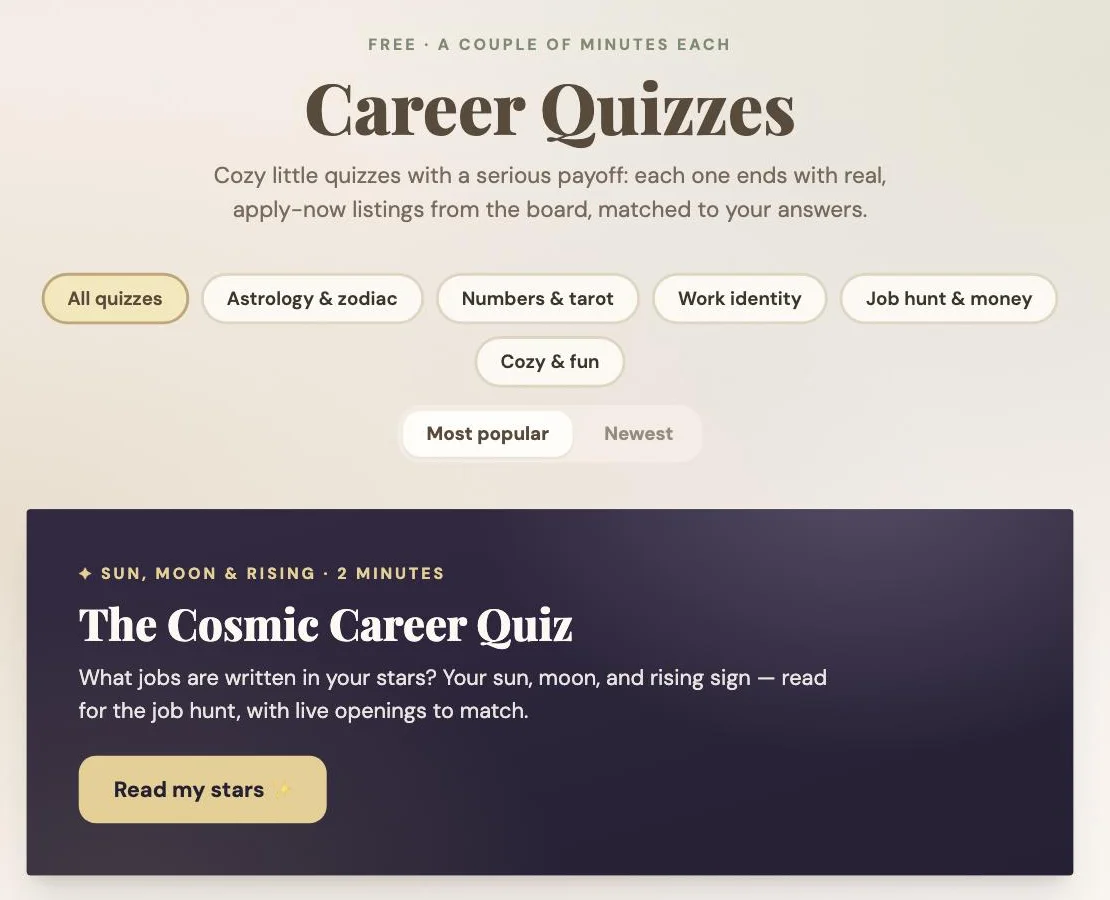
The whole shelf, for the chronically undecided.
Don’t Quit Into Nothing, Line Up the Next Thing First
The best exits I’ve watched were boring ones. Somebody keeps the paycheck, takes one client on the side, then two, watches the side income cross half their salary, and only then writes the email. The job funds the escape from the job.
You can start this week without announcing anything. Pick a niche, put three samples somewhere public, and apply to real listings on real boards. I keep a ranked list of the best writing job boards for freelance writers, and my 30-day plan for landing remote writing jobs is the version with a deadline on it. Freelance article work commonly pays $150–$400+ a piece, and two of those a month moves your runway math faster than waiting to feel ready.
And when you’re ready to actually look: 🛋️ CozyJobs is the coziest job corner of the internet — thousands of jobs on a board updated daily, creative and freelance roles front and center, and the application tracker is free. CozyApply, our browser extension, does basic autofill for free, with premium features when you want more. It’s $25/month, or two months free with the annual plan at $250/year.
FAQ: Should I Quit My Job?
How do I know if I should quit my job?
Check four things before you check your feelings: months of expenses saved, income you can already name, rates that clear your monthly number, and the nerve to be told no repeatedly. Three of four solid means you’re close. If the only solid one is the misery, you’re just done.
How much money should I save before quitting?
Six months of real expenses, not six months of the optimistic budget in your head. Three months is survivable, but it prices you into taking whatever appears, which is how people end up underpaid and back where they started. I’m a writer and not a financial advisor, so check your number with a licensed one.
Should I quit my job without another job lined up?
Usually no. Every exit I’ve watched go well involved side income that already existed, or savings deep enough to fund a slow, picky search. Quitting into nothing is the most reliable way I know to end up in a worse job by spring.
Is it normal to want to quit?
Extremely. Wanting out is one of the most common feelings in working life, and it doesn’t make you ungrateful or bad at your job. It means something about the arrangement isn’t working. What you do with that is the strategic part.
Whatever the quiz says, you’re allowed to want a different life than the one you were handed a script for. Go count your real expenses, name one person who might hire you this month, and write down the number you’d have to charge. Then decide with the math in front of you.
I’m rooting for you.
Keep Building Your Exit Plan
How to Quit Your Full-Time Job and Land Remote Writing Jobs in 30 Days — the escape plan with a deadline on it
The 5 Best Writing Job Boards for Freelance Writers — where I’d hunt for that first pipeline client
12 Steps to Quitting Your Shitty Agency Assistant Job — the long, angry version, for anybody still stuck at an assistant desk

Hello! 👋 I’m Amy Suto. I’m a bestselling author, San Francisco content creator, and co-creator of the job board 🛋️ CozyJobs. Join CozyJobs to browse thousands of jobs and get daily matches to your inbox — writing and creative roles front and center!
GET ON THE LIST
Find your next writing job on 🛋️ COZYJOBS — thousands of jobs on a board updated daily, writing and creative roles front and center. ✨ The application tracker is free (basic CozyApply autofill is too), and paid plans start at $25/month with daily job matches straight to your inbox. Real writers are landing real work—don’t miss out.
FOLLOW ME ON GOOGLE
Add me as a preferred source and Google shows you more of my posts in Top Stories.

MY NEW BOOK: WRITE FOR MONEY & POWER
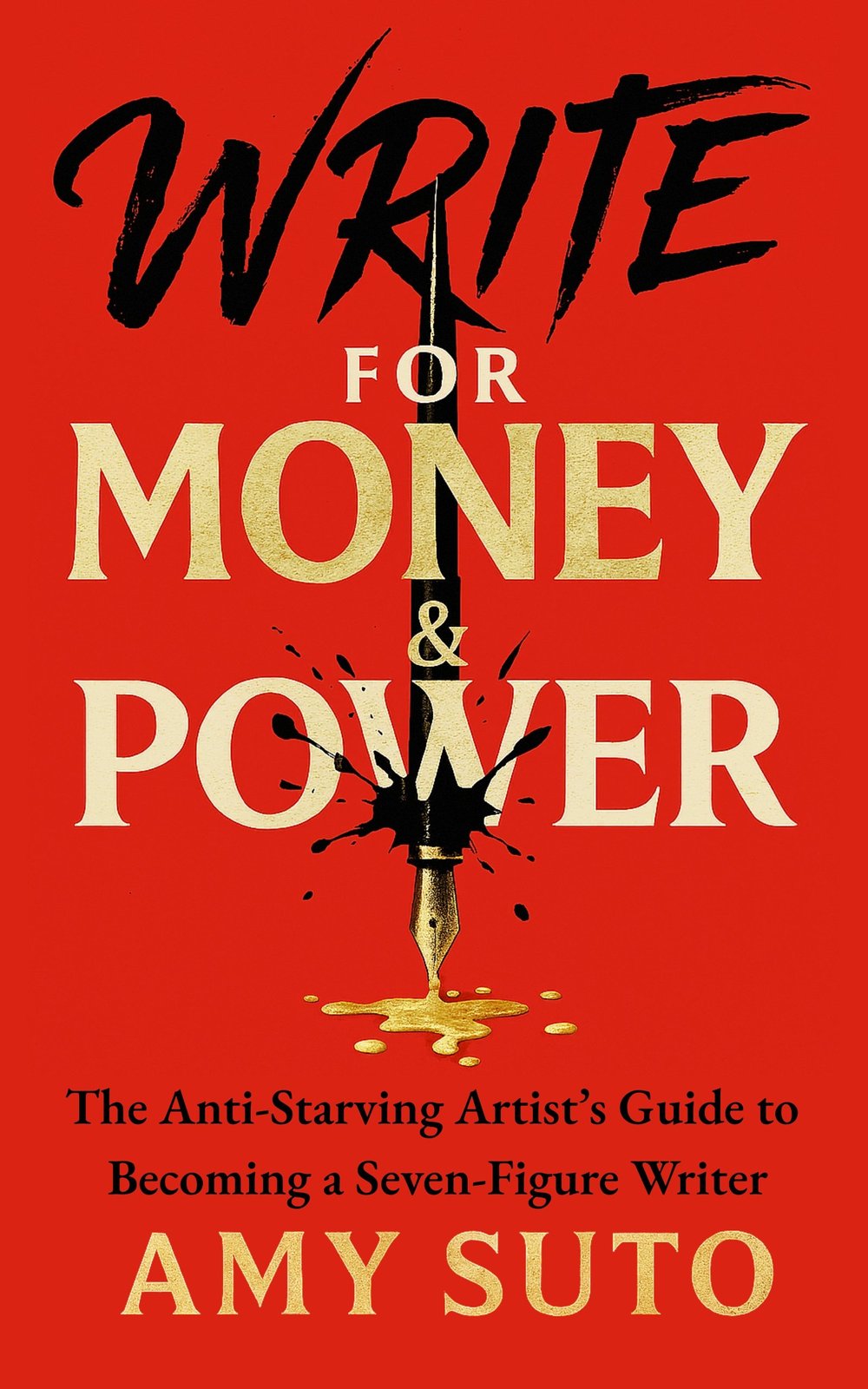
The anti-starving-artist's guide to becoming a seven-figure writer.
MY NEW NOVEL: LET ME BE YOUR GHOST

My romantic thriller arrives November 2026 — a ghostwriter with secrets, a billionaire CEO with more. Preorder one book, get two. Claim your bonus here →
MY ROMANTASY NOVEL: THE ASH TRIALS
The deadliest game is remembering who you are.
MY DETECTIVE NOVEL: THE NOMAD DETECTIVE

Crime crosses borders, but so does this detective.
MY HOW-TO BOOK: SIX-FIGURE FREELANCE WRITER
Work smarter, not harder — without the burnout.
RECENT POSTS
JOIN THE WRITING JOB BOARD
FOLLOW ME ON IG @SUTOSCIENCE