
Working Remotely in Singapore
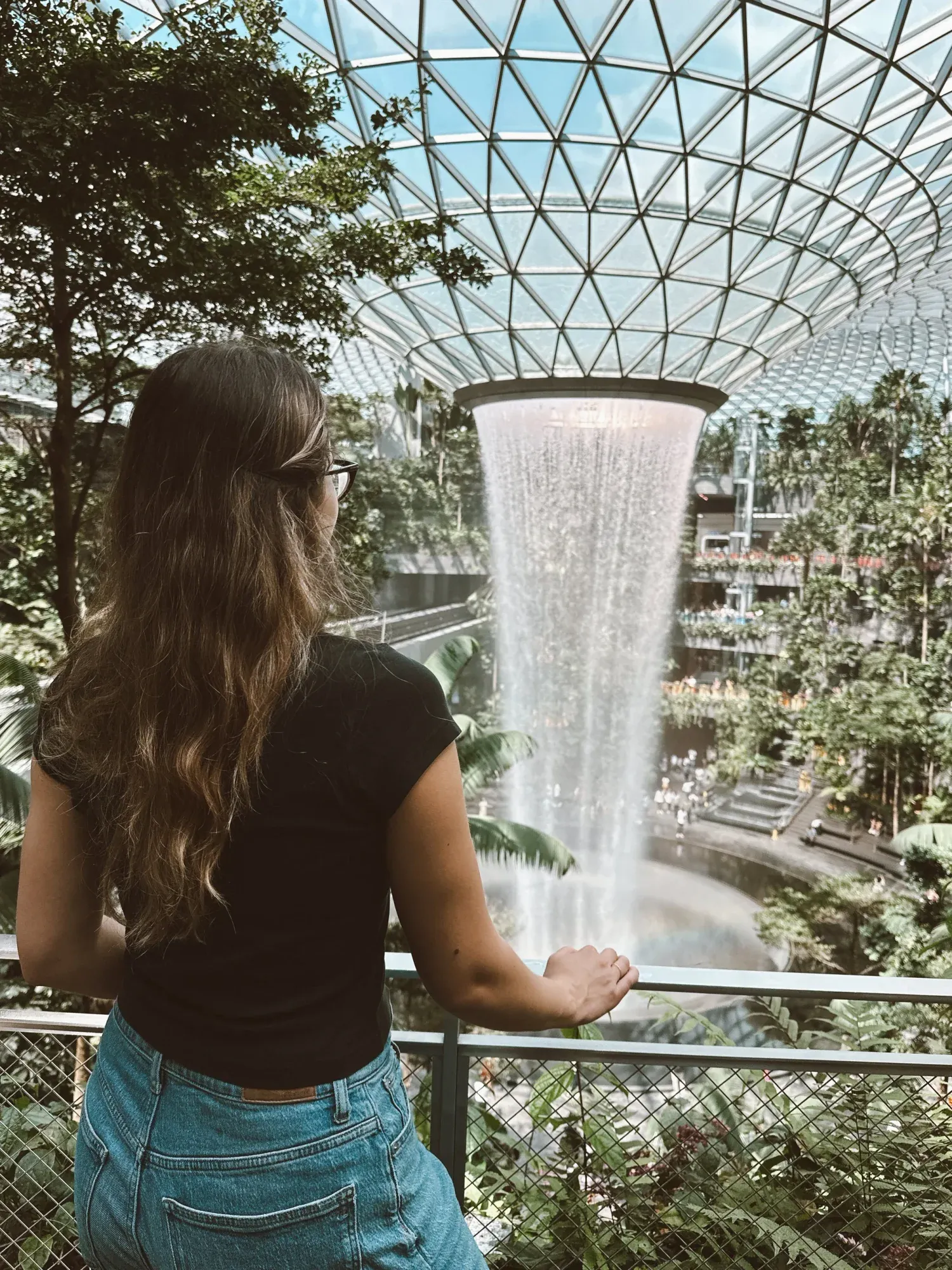
Inside the Singapore Airport — yes, the airport!
This is part of my remote work travel series where I review places I visit as a digital nomad. Check out the rest of my posts and follow me on Instagram, YouTube, Substack, or on TikTok for more travel content!
Arriving in Singapore was like stepping into a theme park that’s pretending to be a major metropolis: it’s so manicured, clean, and safe that I can’t believe it belongs on the same planet as cities like NYC or SF. Don’t even get me started on all of the attractions and art exhibits in the city, from the light shows to the cloud forests and insane malls. Even the Singapore Zoo’s Night Safari feels like it was ripped from the brain of Walt Disney himself.
Singapore is a futuristic, modern city but it’s also a small city-state that still has laws in place where thieves can expect to get their hands cut off if they get sticky fingers. Cameras are everywhere which creates an atmosphere of safety — but also an eerie sensation of always being watched.
I loved Singapore in all of its soupy humidity and neon modernity. This place is a cross between Hawaii and the SoHo neighborhood of NYC. How does it stack up as a destination for digital nomads, though?
I’ll break it all down for you in my travel guide:
4 Tips for Getting Around Singapore for Digital Nomads + Remote Workers
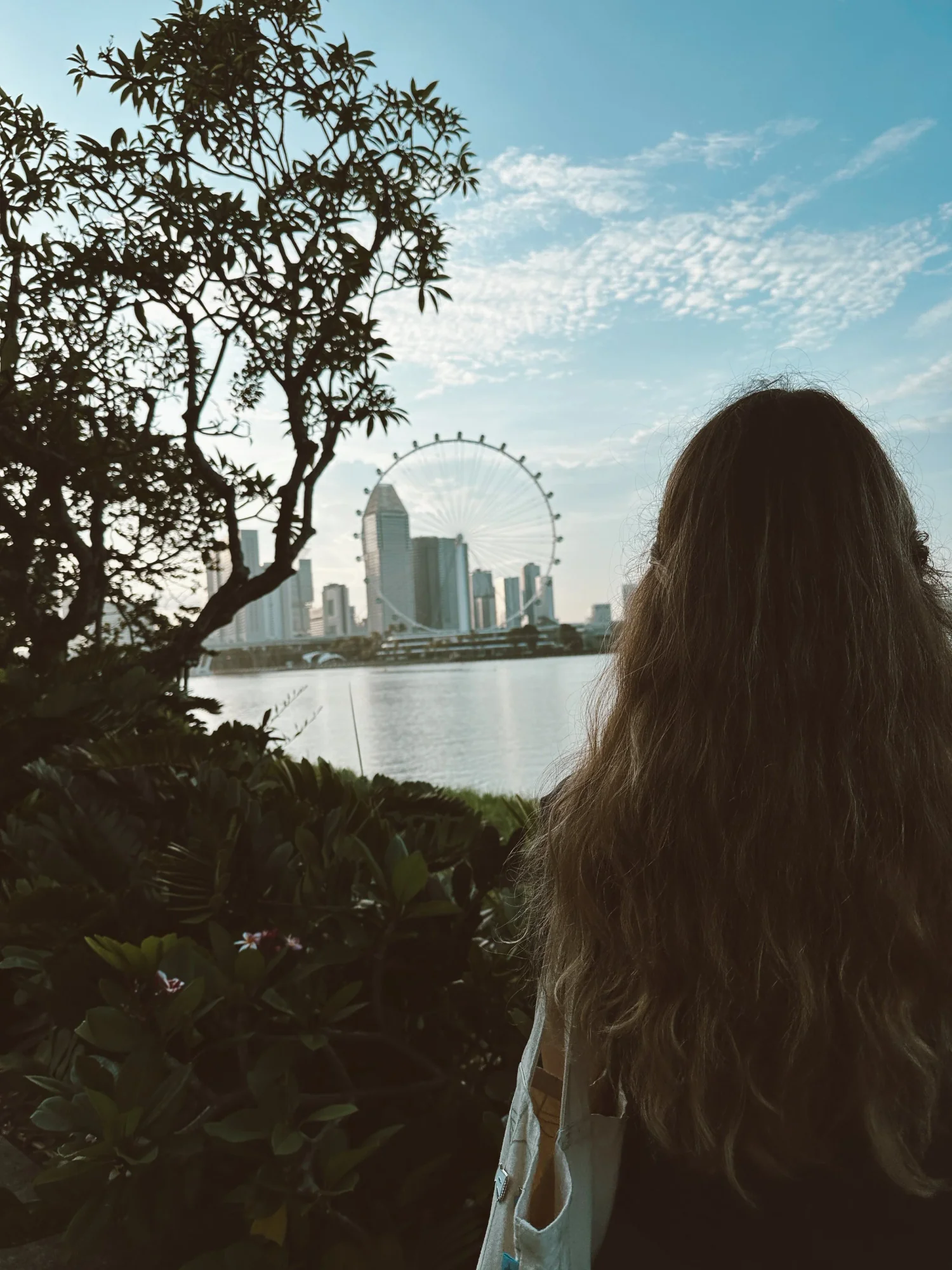
Evening walk along the water by the Marina Bay Sands and Cloud Forest
Singapore is one of the easiest cities to navigate in the world, but here are some things you should still keep in mind:
You don’t need cash unless you plan on going to the hawker markets. These little markets are mostly cash-only, but some of the more modern food halls accept cards. But if you decide to dig deeper into the culinary world of hawker markets, I’d recommend going on a food tour and having a guide curate for you instead. My partner Kyle did this and said it was a great experience: you get to try more food and don’t have to deal with cash. (More on this in the “what to do” section of this blog!)
Public transit is amazing and gets you everywhere in the city for cheap. You can use any credit card with a tap function or your Apple wallet to tap in and out of public transit, and that includes the train from the airport to the heart of the city — and most rides are only about $2.
Everyone speaks English. No need to memorize any basic phrases in other languages, everyone speaks English here. Definitely refreshing after I’ve spent the past few months in countries where English was more scarce!
This might sound weird, but you’re going to want to plan to spend more time in the airport — just for sightseeing. After arriving at the airport and going through immigration and customs, spend some time walking over to The Jewel: an extension of the airport that has a giant mall and a huge indoor waterfall. I recommend grabbing some food at a restaurant here as well as tea from Chicha San Chen and just hanging out by the waterfall as your first stop after arriving! Singapore’s airport truly is next level, and you’ll have to see it for yourself to understand why.
Where to Stay in Singapore for Digital Nomads + Remote Workers
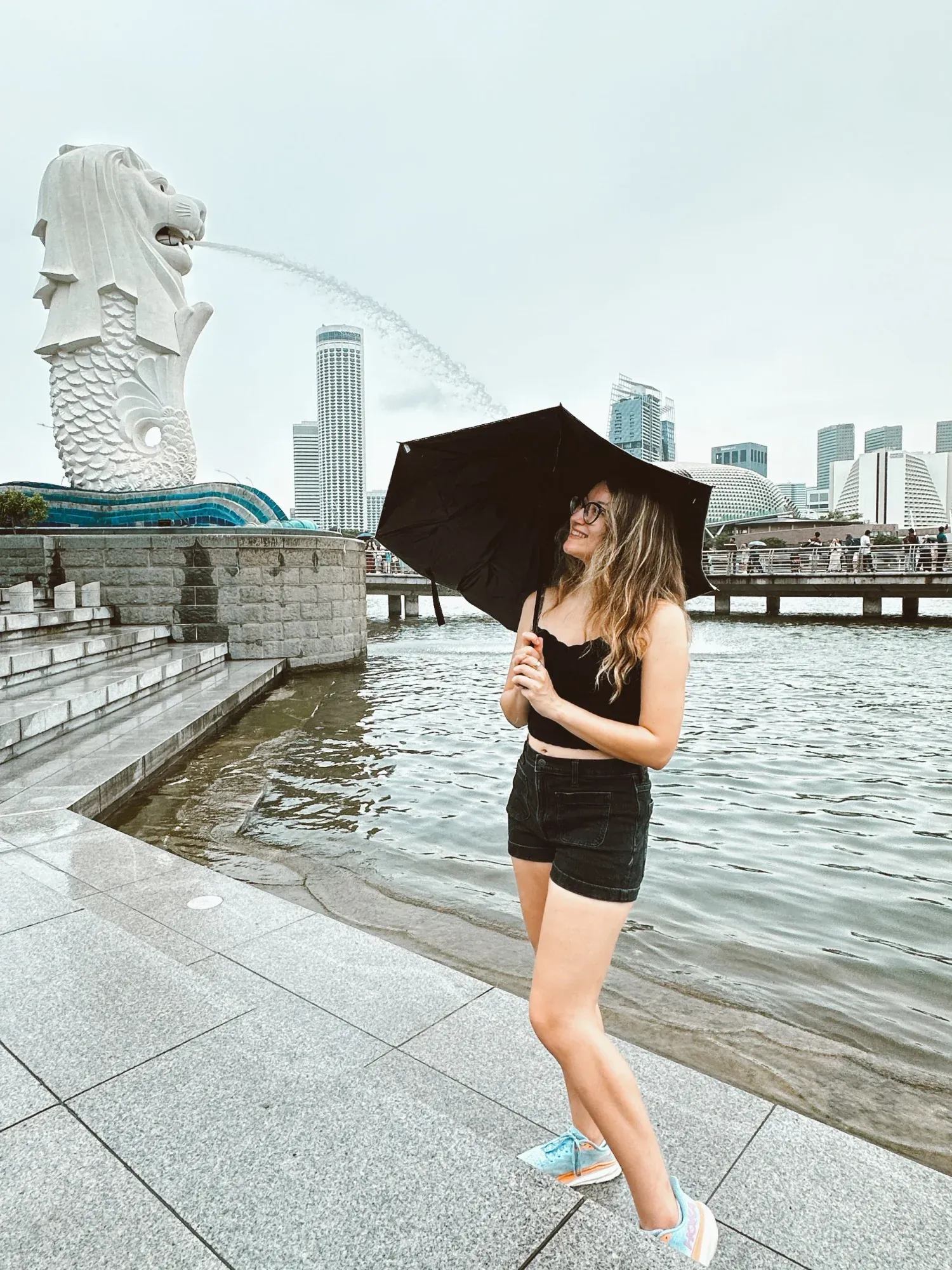
The obligatory photo with the Singapore lion
Listen, if you’re going to Singapore you should expect to shell out a pretty penny for wherever you’re staying. That doesn’t mean you have to spend $500/night on the Marina Bay Sands: there are a lot of cute (but very tiny) hostels and hotels around town.
We stayed in a private room at the ST Singature Tajong Pagar in Chinatown and while the hostel was totally fine (the room was a literal shoebox, but we got it for free with credit card points), there was tons of construction and so I can’t fully recommend this accommodation for you.
Chinatown as an area is amazing, though: it’s vibrant and adorable with colorful buildings and cute architecture. The streets here feel like you’re walking along a colorful boardwalk in the Carolinas or a trendy beach town, not in Singapore. Chinatown also has a number of hip coffeeshops, Michelin-star restaurants, hawker markets, and fast casual food halls. It’s also super close to the metro stop and a long walk or quick metro ride away from the Marina.
You can’t really go wrong staying in other areas of Singapore as everything is connected by great public transit — plus, Singapore is pretty small. But I would still recommend basing yourself in Chinatown to get the best experience in Singapore.
RELATED: The Best Travel Cards for Digital Nomads
What to Do in Singapore for Digital Nomads + Remote Workers
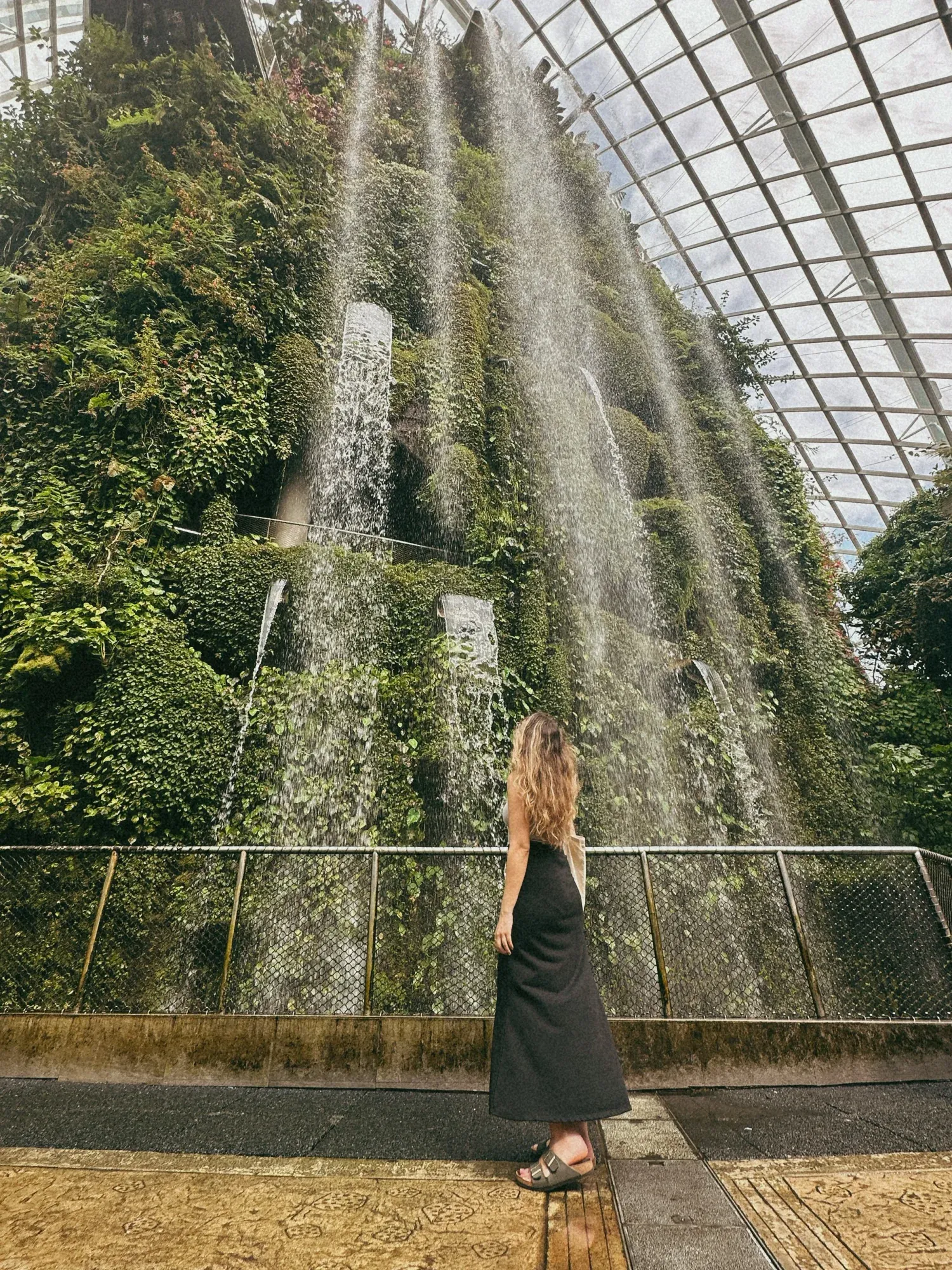
Visiting the Cloud Forest
Singapore is pretty small and compact, so you can knock out most of what you want to do here within a few days. Here are my top recs:
Walk around Gardens by the Bay and see the Cloud Forest. The Cloud Forest has a huge indoor waterfall and indoor greenhouse. It’s definitely a touristy spot and pretty expensive, but I would opt out of the combo ticket for the gardens and the Cloud Forest and just get the single ticket to the Cloud Forest.
Go to the Rooftop Bar of the Marina Bay Sands at Sunset. After going to the Cloud Forest, you can wander around the grounds in front of the Marina Bay Sands or pop up to their rooftop bar for an astounding view of all of Singapore. The best way to experience the Marina Bay Sands rooftop is to get a $30 ticket for the rooftop bar — which includes a voucher for food and drinks. The best time to do this is at sunset or right before when the rooftop isn’t too crowded. This is better than doing the observatory because you get a better view — and food and drinks!
Watch the night light show at the Garden Rhapsody at the Supertrees. This evening light show was a nice way to end the day. Wander over to the free Supertrees exhibit for the light show after the sun has gone down — maybe after you’ve hit up the Cloud Forest and Marina Bay Sands Rooftop.
Wander around the Marina Bay Sands Mall. This mall reminded me of Vegas: there’s a “Venetian Canal” running through it and tons of high-end shops in the Marina Bay Sands. It’s worth a wander — Singapore as a whole has pretty impressive malls — and a great way to get out of the heat and humidity.
Experience the Night Safari at the Mandai Wildlife Reserve. So, the Night Safari is officially at the Mandai Wildlife Preserve, not the Singapore Zoo (which is right next door!) When I was doing my research about the Night Safari, I was a little confused about what it entailed. Basically, you get a ticket and then you can take a nighttime tram ride through open-air wildlife exhibits, and then after the tram ride you can do the hiking trails, see the lions and tigers get fed (on Friday and Saturday nights only) and see a nighttime show with other trained animals. It’s a fun all-ages activity that feels like you’re in an amusement park. Definitely worth visiting, and if you’re a wildlife fan you probably should also make a separate trip back to the Singapore Zoo which I’ve heard is pretty great.
Take a food tour. My partner Kyle did this Michelin Star Local Hawker Food Tour while I was having lunch with one of my clients. He loved the tour but said it was not vegetarian-friendly as an FYI (part of the reason I didn’t join.) This was one of his favorite food tours he’s ever done on our travels (and we’ve done a LOT of food tours in the past 4 years!) and he loved the guide and the selection of food — which was absolutely worth the cost of the tour.
Walk around Arab Street and Kampong Glam. Another great area to wander around is Arab Street and Kampong Glam. You can get some great baklava here, and the streets are cute and colorful. I almost wished we had done a walking tour over in this part of town, but it was so hot we decided to skip most of the outdoor activities!
Singapore is hot and humid, so just be warned that the summer months are sweaty. I was definitely taking multiple showers a day, and my partner Kyle even bought me a tiny little portable fan to keep me cool as we navigated this muggy jungle city.
What to Eat in Singapore for Digital Nomads + Remote Workers
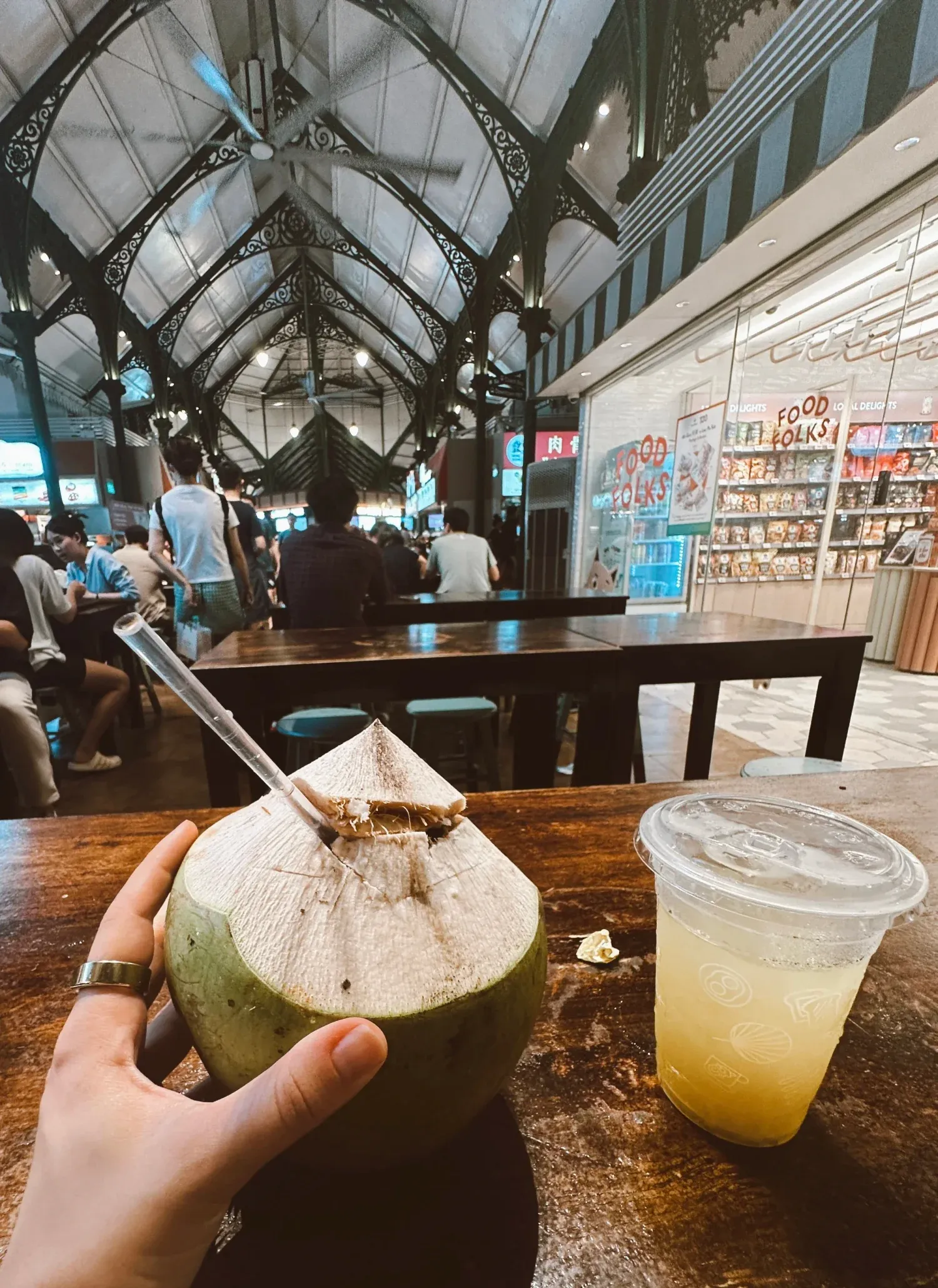
Singapore feels on par with Los Angeles prices for dining out. Weirdly, I don’t have as many recommendations for you as I do for most cities I visit, in part because I became obsessed with a local food hall and wasn’t wowed by most of the other food we had.
Anyways, here are my top 3 recommendations for what to eat in Singapore:
For Breakfast/Lunch: Keen’s Bagelry. This bagel shop is a bit hard to find, and is located in the second floor of a mall food court (as many places are in Singapore!) The wait time was nearly 30 minutes which was crazy, but the wait was worth it as the bagel with scallion cream cheese was so perfectly chewy and salty. Highly recommend, but be patient.
For Breakfast/Lunch: Two Men Bagel House. This hip bagel joint had some great bagel sandwiches. I got an egg sandwich with hash browns which was awesome — one of the best bagel sandwiches I’ve had in a long time — and the most expensive at $22 per sandwich (insane!!!) But still worth it.
For Lunch/Dinner/Drinks/Coffee/Coconuts/Dessert: Le Pa Sat Food Hall. This hawker market/food hall had AMAZING food. I had a $5 vegan bowl here that was so good, and at the center of the market there’s a juice stand that sells fresh sugarcane juice as well as literal coconuts they’ll open with a machete for you! I love a fresh coconut and my dinners here were only $7 for a fresh coconut, miso soup, and a huge vegan bowl with rice and fresh veggies. Hawker markets are subsidized by the government — which is why they’re a lot cheaper — but the food here was super fresh and high-end compared to some of the other hawker markets around town. This is a must-stop on your trip — and is conveniently located in the Chinatown neighborhood, where I recommend you stay :) This market also seems to accept credit cards at every stall.
Overall Thoughts on Singapore
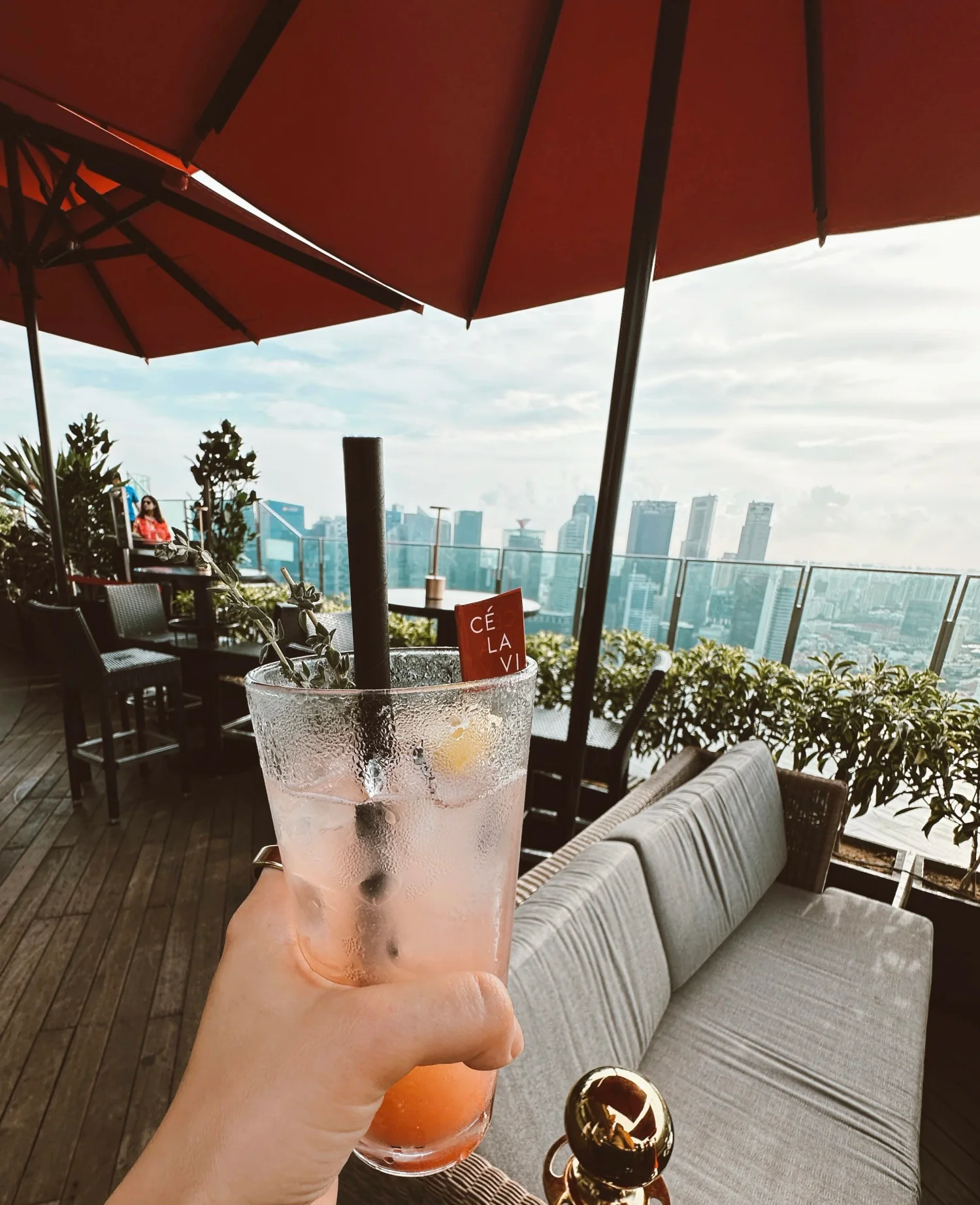
After about four or five days, you’ll likely be ready to leave Singapore. That’s not because it isn’t a lovely place to be: it’s just that you’ll likely have crossed everything off your bucket list and are ready for something new — and you’ll probably be tired of paying $22 for a bagel.
Singapore is worth visiting to experience a lively, modern city. It was cool to walk by the waterfront at sunset and be met with people outside running on the boardwalk, dancing at a light festival, and hanging out with friends or co-workers. It’s also neat to see how public art installations are supported on such a high level here. Maybe in another life I would enjoy living here, but in this life I’m glad to leave the humidity and high prices behind.
When I’m reflecting on my experiences in places to write these travel blogs, I always want to give you an honest look at a place. It’s hard to discern the pros and cons of a city from breathless social media posts by travel influencers — and I want to cut through the noise and give you the reality of what it’s like to be a digital nomad in these places.
For me, an ideal place for nomads is one that balances value (affordability and quality) with unique cultural experiences and community. I’m always chasing the high of stepping into a new city that feels buzzing with life and possibilities. Singapore had some of that, for sure. Same with NYC. But as you’re evaluating places to spend weeks or months of your year, I think it’s important to consider livability across more variables.
Thanks for reading and happy travels!
My Ratings of Singapore as a Digital Nomad
Affordability: ⭐️ 1/5 stars. Listen, Singapore can be made to be more of an affordable trip, but you should still expect most things to cost 20% more than they should.
Food Quality: ⭐️⭐️⭐️ 3/5 stars. The food was really good in Singapore. I’d say it’s on par with Taipei, especially in the market and food hall scene. The fruit also tasted so fresh.
Vegetarian Options: ⭐️⭐️⭐️⭐️ 4/5 stars. I had no problems finding vegetarian options at most places, and the veggie food here is great.
Adventures/Day Trips: ⭐️ 1/5 stars. There isn’t a whole lot to do around Singapore, which contributes to making it feel like it’s in a bubble.
Cafes/Co-Working Space Availability: ⭐️⭐️⭐️ 3/5 stars. From cafes to coffeeshops to high-end food court lobbies, there are plenty of places to whip out your laptop and jam through some work. However, I didn’t find that “perfect” coffeeshop that was cozy and great for long work sessions, maybe because I only was in Singapore for 5 days. So, I give this category a 3/5 stars with the caveat that had I spent more time here I could have maybe found an ideal coffeeshop to do work in.
Digital Nomad-Friendly City: ⭐️ 1/5 stars. There are some good cafes to work at in the city (most of which were pretty empty), but because of how expensive it is here, I’d argue that it’s not very nomad-friendly. There would need to be more affordable accommodations for me to consider this a city that’s catering to foreign travelers.
Value of Accommodations for Remote Workers: ⭐️ 1/5 stars. It’s super expensive to stay in Singapore, which is why the city is best enjoyed in a few days. We stayed in a tiny shoebox of a room — even smaller than Tokyo! — and it was laughably expensive.
General Weather: ⭐️ 1/5 stars. Singapore is almost unbearably humid. This is part of the reason why I wouldn’t recommend longer-term stays.
Air Quality: ⭐️⭐️⭐️⭐️ 4/5 stars. The air quality was great when we were here.
Water Quality: ⭐️⭐️⭐️⭐️ 4/5 stars. We tested the water quality from the tap at our hotel and it was shockingly good (less than 80 ppm.)
Overall Rating: ⭐️⭐️⭐️ 3/5 stars. Singapore is a cool city. It feels very warm and people seem happy here. However, it’s not really set up for long-term stays as it feels wasteful to spend so much to live here for any length of time, so unless the city becomes more affordable I’d recommend just visiting for a few days on your way to other cities in Asia.
If you liked this post, be sure to subscribe to my newsletter and check out the rest of my remote work series. You can also follow me on YouTube, Instagram, Substack, or on TikTok to join me in my journeys in real time. I can’t wait to continue to share my travels with you!
Want a Remote Job and Travel the World?
You know the spiral: 47 tabs open, the same resume copy-pasted into 12 different forms, every "we'll be in touch" disappearing into the void. Upwork feels like a hunger games. LinkedIn easy-apply is a black hole. Your tracking spreadsheet has its own tracking spreadsheet.
Job hunting shouldn't feel like this.
That's why we built 🛋️ CozyJobs — the coziest job corner of the internet for finding (and actually landing) your next role. Best jobs on the web, autofilled applications, one place to track every move (with a lofi soundtrack to keep you in the zone).
Here's everything tucked inside:
🌐 Best Jobs on the Internet — curated remote, freelance, and full-time roles from across the web, all pinned to one tidy board
📌 One-Click Autofill — on supported sites, apply with a single click. No more typing your address for the 800th time
📋 The Cozy Tracker — every application pinned to your corkboard so you always know what's out there (and what's ghosting you)
🧠 Smart Job Matching — AI that surfaces roles that actually fit you, not just keyword soup
👤 Multi-Profile Support — different resumes for different vibes, swap with a click
📥 Save From Anywhere — drop in listings from LinkedIn, Indeed, or that random thread a friend sent
🎧 Lofi Job Hunt Radio — chill beats to bop through your search. Because applying shouldn't feel like a tax audit
Try CozyJobs today — bring the calm to your job hunt and see what happens.
Basically, everything you need to make your job travel with you. See you inside!
-Amy
Pin for Later!
p.s. I create my blog voiceovers and my podcast episodes using the tool Wondercraft AI, a text-to-speech tool that speaks in YOUR voice. 🎙 Use my code SUTO50 or this link to get 50% off your Wondercraft AI subscription!*

Hello! 👋 I’m Amy Suto. I’m a bestselling author, San Francisco content creator, and co-creator of the job board 🛋️ CozyJobs. Join CozyJobs to browse thousands of jobs and get daily matches to your inbox — writing and creative roles front and center!
GET ON THE LIST
Find your next writing job on 🛋️ COZYJOBS — thousands of jobs on a board updated daily, writing and creative roles front and center. ✨ The application tracker is free (basic CozyApply autofill is too), and paid plans start at $25/month with daily job matches straight to your inbox. Real writers are landing real work—don’t miss out.
FOLLOW ME ON GOOGLE
Add me as a preferred source and Google shows you more of my posts in Top Stories.
MY NEW BOOK: WRITE FOR MONEY & POWER
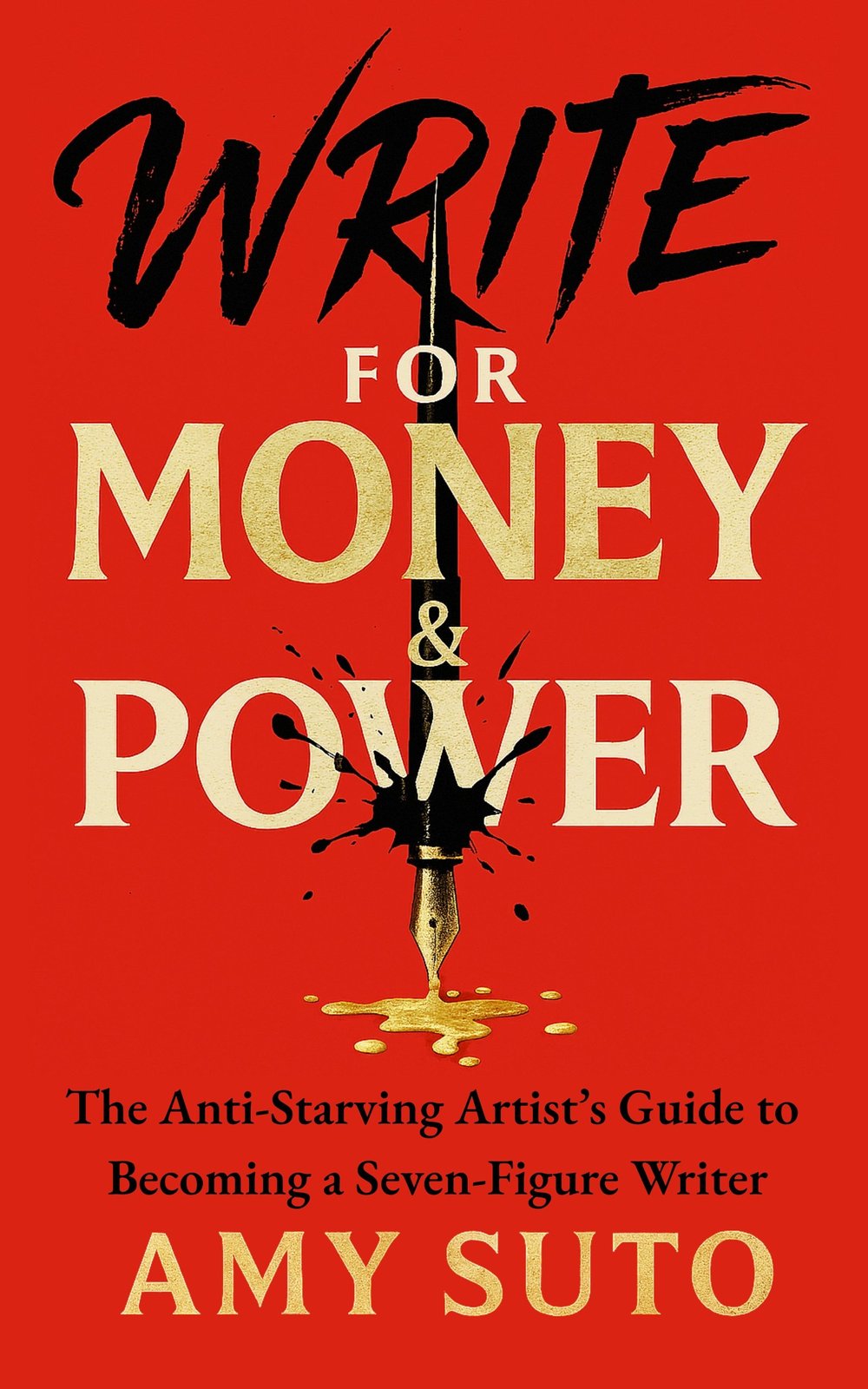
The anti-starving-artist's guide to becoming a seven-figure writer.
MY NEW NOVEL: LET ME BE YOUR GHOST
My romantic thriller arrives November 2026 — a ghostwriter with secrets, a billionaire CEO with more. Preorder one book, get two. Claim your bonus here →
MY ROMANTASY NOVEL: THE ASH TRIALS

The deadliest game is remembering who you are.
MY DETECTIVE NOVEL: THE NOMAD DETECTIVE

Crime crosses borders, but so does this detective.
MY HOW-TO BOOK: SIX-FIGURE FREELANCE WRITER
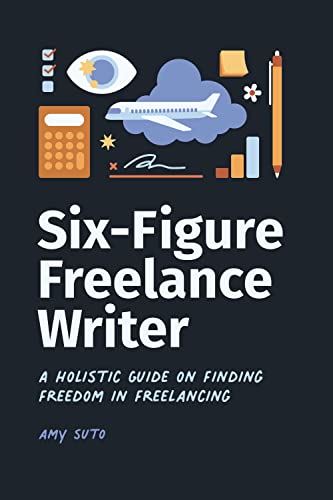
Work smarter, not harder — without the burnout.
RECENT POSTS
JOIN THE WRITING JOB BOARD
FOLLOW ME ON IG @SUTOSCIENCE

![🌁 chapter fifteen: the chamber [let me be your ghost]](https://substackcdn.com/image/fetch/w_480,c_limit,f_auto,q_auto:good,fl_progressive:steep/https%3A%2F%2Fsubstack-post-media.s3.amazonaws.com%2Fpublic%2Fimages%2F6b56d429-2b09-4a94-9b0f-415a889b419b_1080x1080.png)